
Abhishek slaps 10-crore defamation notice on Madan Mitra over 'murderer' jibe
.gif)

Download Mobile App 






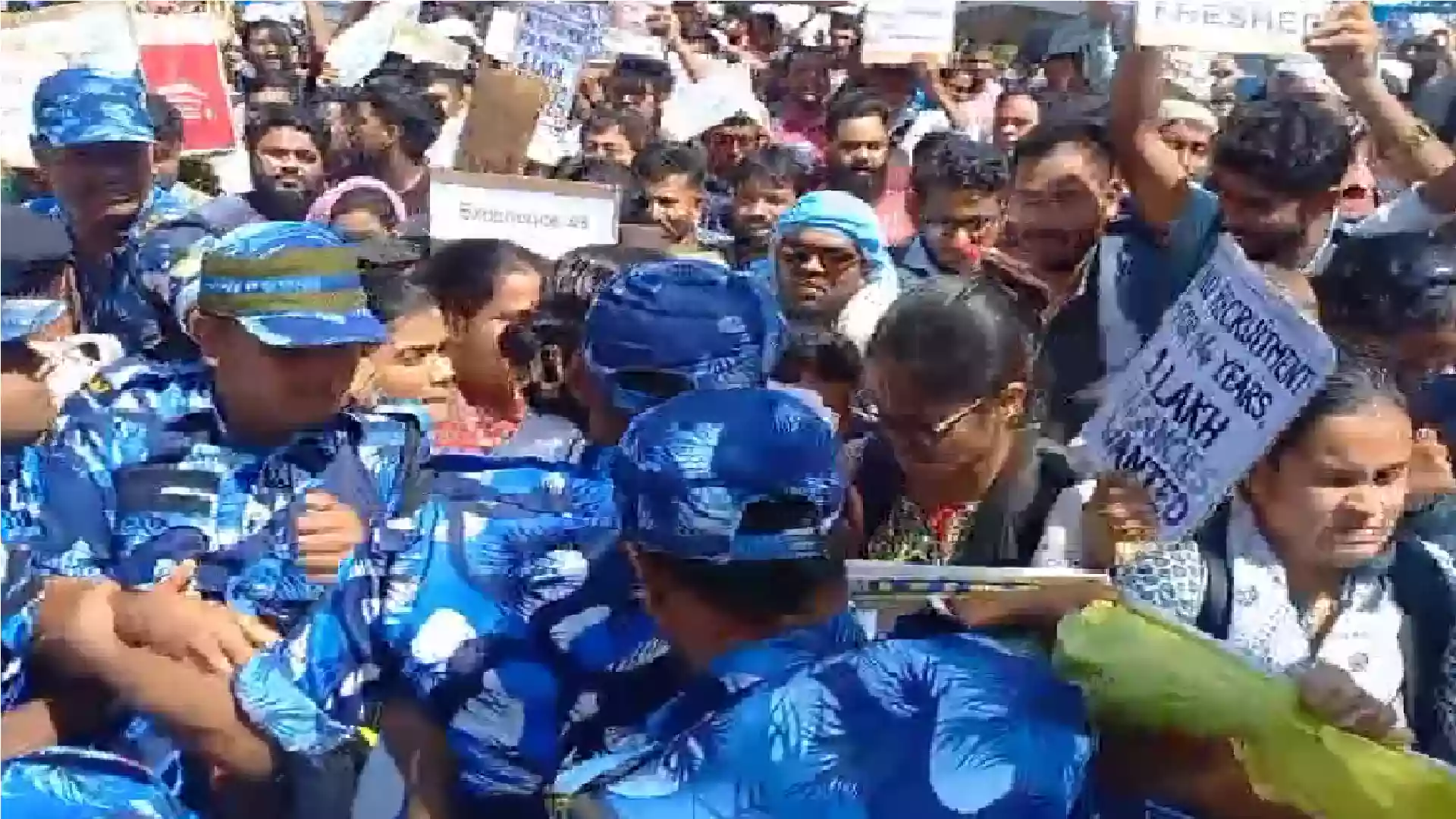
In the heart of Kolkata's festive fervor, as the city drapes itself in the vibrant hues of Durga Puja preparations, a fresh wave of unrest has erupted on the streets. Just weeks after the Supreme Court's directive paved the way for teacher recruitment exams—conducted in two phases for classes 9-12—the air is thick with frustration. On this auspicious Chaturthi morning, hundreds of job aspirants, still reeling from the recent SLST (State Level Selection Test) 2025, took to the roads from Salt Lake's Karunamoyee, marching towards Bikash Bhawan, the nerve center of West Bengal's education department. Their banners fluttered with cries for justice: scrap the controversial 10-mark bonus for reserved categories, inflate zero vacancies to a lakh-strong opportunity pool, and grant an urgent audience with Education Minister Bratya Basu. What began as a determined procession quickly spiraled into chaos, with police lathis swinging and protesters scattering in a scene that evoked the city's turbulent protest history.
The timing couldn't be more poignant—or provocative. Barely a month has passed since the Supreme Court-mandated exams wrapped up, a hard-won victory for aspirants who had battled delays and uncertainties for years. Yet, as results trickle in and the recruitment process inches forward, a new grievance has taken center stage. The SLST 2025 candidates, many of whom poured months into preparation, allege a blatant violation of their fundamental rights through the "additional 10 marks" awarded to candidates from reserved backgrounds—a policy they decry as discriminatory and opaque. "This isn't reservation; it's robbery of merit," shouted one protester, a young graduate from a nondescript coaching hub in Salt Lake, his voice hoarse over the din of slogans. Echoing broader anxieties in a state where youth unemployment hovers like a shadow, they demand not just policy tweaks but a systemic overhaul, including expanding teacher vacancies to absorb at least 100,000 fresh hires amid a glaring shortfall in schools.This isn't an isolated flare-up; it's the latest chapter in a saga of simmering discontent.
Over the past few months, Kolkata's arterial roads—from College Street to Bidhannagar—have repeatedly borne witness to similar agitations. Job seekers, armed with placards and unyielding resolve, have clashed with authorities time and again, turning public spaces into battlegrounds for equity. The recent teacher recruitment drive, split into two rounds as per judicial orders, was meant to be a balm, but it has only amplified the chorus of complaints. Aspirants point to discrepancies in exam conduct, delays in result declarations, and what they see as arbitrary quotas that tilt the scales against general-category contenders. As the protest march snaked toward Bikash Bhawan, the air crackled with tension. Protesters, a mix of fresh graduates and seasoned exam-takers in their mid-20s, chanted rhythmic demands: "10 marks hatao, adalat bachao!" (Remove the 10 marks, save the court order!). They weren't just voicing anger; they were invoking constitutional rights, arguing that the bonus system undermines the merit-based ethos the Supreme Court sought to enforce.
A key flashpoint was the "zero vacancy" issue—official tallies showing no openings despite acute teacher shortages in rural and urban schools alike. "We've cleared exams, but there's no post to claim," lamented a Howrah job aspirant, who joined the protest march after skipping family Puja shopping. The group's formal plea to meet Minister Basu underscores their strategy: dialogue over disruption, though today's events suggest the latter often prevails.Authorities, anticipating the unrest, had mobilized a formidable police contingent—rows of officers in riot gear, barricades at key junctions, and water cannons on standby. By midday, the Karunamoyee area resembled a fortress, with tear gas canisters at the ready and traffic grinding to a halt. Eyewitnesses described a frantic push-and-pull: protesters hurling stones and water bottles, police responding with batons and boots. At least a dozen injuries were reported, mostly minor, but the psychological toll is deeper—a generation's dreams deferred yet again.
The Education Department remained tight-lipped, issuing a terse statement urging "peaceful resolution" while hinting at ongoing reviews of the quota policy. Yet, with Puja pandals rising and the city poised for celebration, this clash serves as a stark reminder: beneath the cheer, Bengal's youth are grappling with a future that's anything but festive.Looking ahead, the stakes couldn't be higher. As recruitment panels deliberate and results loom, these protests could snowball into a larger movement, drawing in aspirants from police, health, and other sectors plagued by similar woes. Political undercurrents simmer too—opposition voices are already amplifying the cries, framing it as governance failure. For now, the streets of Salt Lake echo with unresolved fury, a poignant counterpoint to the conch shells and dhak beats heralding Maa Durga's arrival. In a state where education is both promise and peril, today's tumult is more than a headline—it's a harbinger of battles yet to unfold.






 West Bengal
 Bihar
Bihar Uttar Pradesh
 Jharkhand